Competition
Opera for the Dead (祭歌) // Monica Lim & Mindy Meng Wang Australia / China
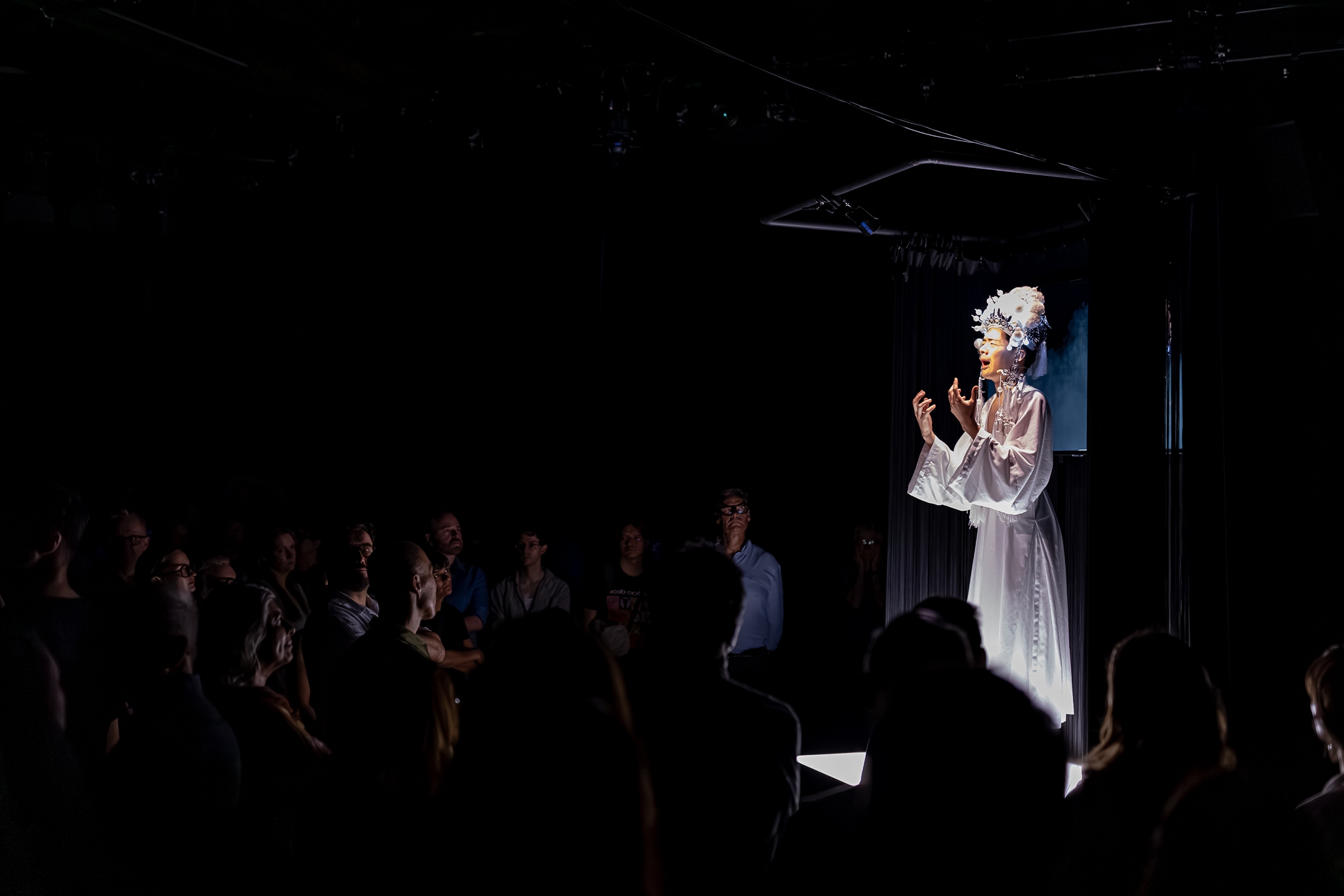
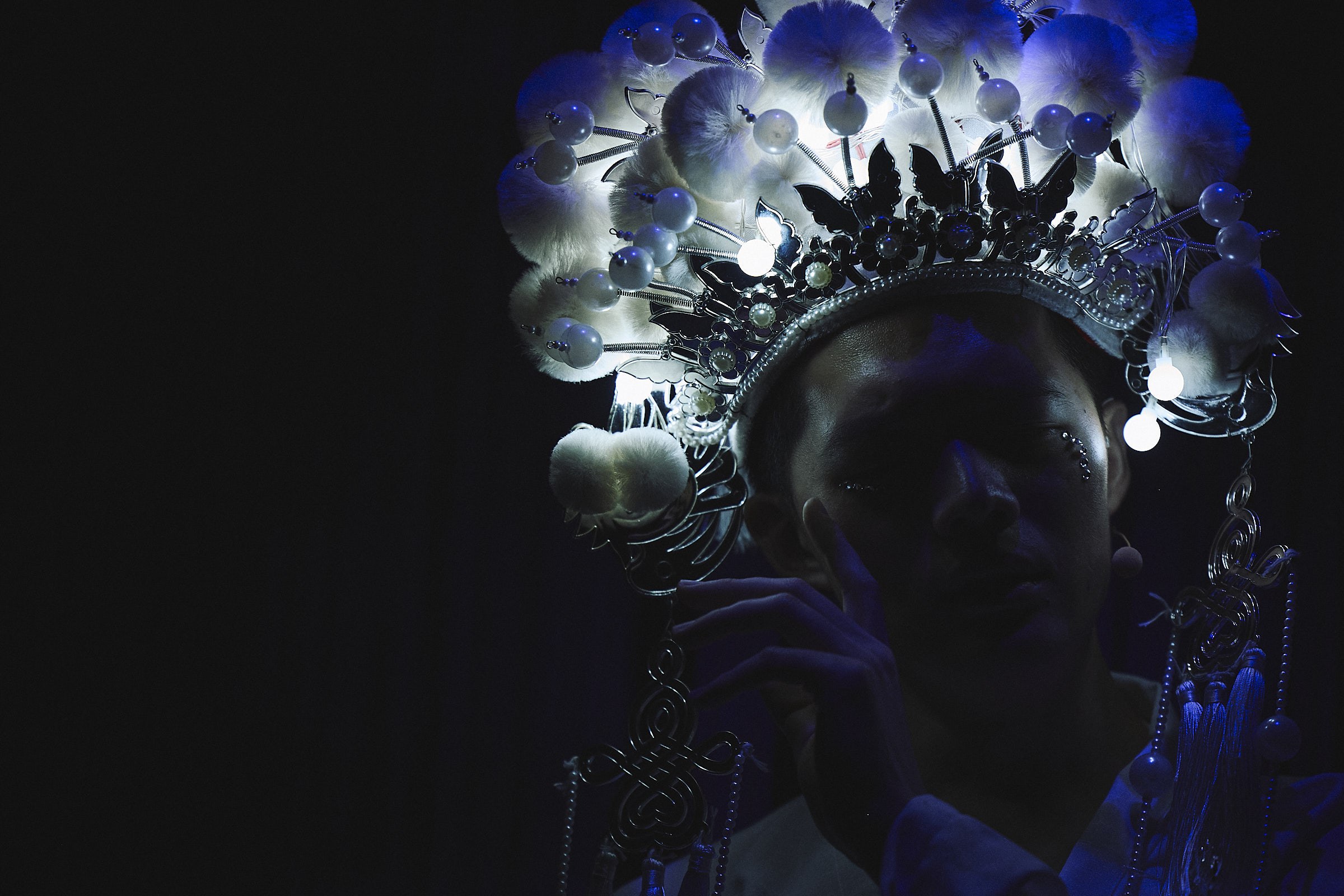
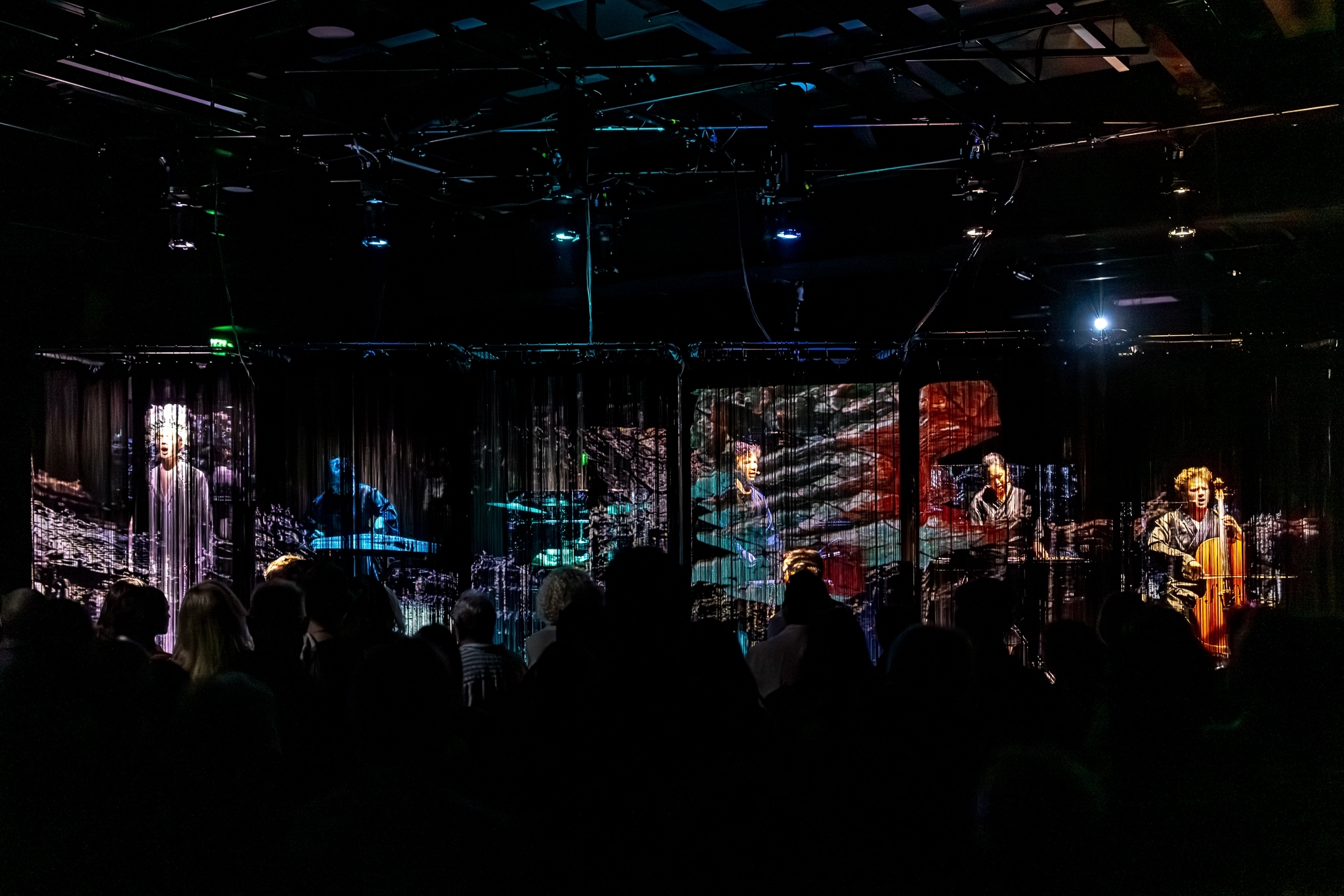
Opera for the Dead unfolds like a transmission from two temporal planes at once: the ancient and the not-yet-born. Crafted by composer-technologist Monica Lim and guzheng virtuoso-composer Mindy Meng Wang, the piece immerses the audience in a world where Chinese mourning rituals are rearticulated through electronic processing, ambisonic sound and three-dimensional animation. What could, in lesser hands, risk becoming illustrative instead becomes a deeply sculptural experience. Sound behaves like weather, scenography like memory, and the performers, part human and part avatar, move through a terrain that seems to be writing itself in real time.
At its core, the work is an exploration of how we meet the dead: not as symbols or abstractions, but as an active presence shaping the living. The tension between tradition and technology is never moralised; it becomes a poetic engine. The guzheng’s resonant strings bleed into digital atmospheres, while live musicians interact with animations that feel at once ceremonial and cosmic. The audience is invited to move freely through the space, shifting perspective as the environment mutates from stage to cinema to dance floor. This porousness of form mirrors the porousness of the subject: the membrane between life and death grows thin, and the performance invites you to step into the thick of it.
What distinguishes Opera for the Dead is its refusal to sensationalise mourning. It treats grief with an almost architectural intelligence, examining how rituals structure emotion and how technology can magnify or distort that structure. There is humour in the macabre and beauty in the dissonant; the work acknowledges the contradictions that accompany loss without forcing them into resolution. Instead, it conjures a world in which these contradictions can coexist and illuminate each other.
The jury responded strongly to the work’s ability to build an immersive cosmology from deceptively simple components. They noted the richness of its visual and sonic vocabulary, its capacity to travel between past and future without losing its grounding in the present, and its commitment to a multi-sensory dramaturgy that remains emotionally legible. Opera for the Dead points to a music theatre that is neither framed by narrative nor constrained by genre. It treats sound as ritual, image as portal and space as participant.
In an era saturated with digital memorials and disembodied communication, Opera for the Dead offers something rare: a reimagining of mourning that is communal, tactile and vibrantly alive. It widens the aperture of what music theatre can hold, suggesting that reinvention is not a rejection of tradition but a way of carrying it forward into unexpected futures.
Opera for the Dead unfolds between two temporal planes: the ancient and the not-yet-born. Created by composer-technologist Monica Lim and guzheng virtuoso Mindy Meng Wang, the piece immerses the audience in a world where Chinese mourning rituals are rearticulated through electronic processing, ambisonic sound and three-dimensional animation.
Sound behaves like weather, scenography like memory. The performers, part human and part avatar, move through a landscape that appears to write itself in real time. The work explores how we encounter the dead not as distant symbols but as presences that shape the lives of the living.
The tension between tradition and technology becomes a poetic engine rather than a conflict. Guzheng strings bleed into digital atmospheres while live musicians interact with ceremonial and cosmic visual environments. As the audience moves through the space, the boundaries between stage, cinema and installation dissolve.
Rather than sentimentalising loss, the work treats grief as structure. Beauty, humour and anguish coexist without resolution. In doing so, Opera for the Dead expands music theatre into a shared experiential space where remembrance becomes communal, tactile and unexpectedly luminous.
Creative team
Creative concept & composition
Monica Lim
Mindy Meng Wang
Dramaturgy
Ophelia Huang
Animation
Rel Pham
Set & lighting design
Jenny Hector
Choreography
Carol Brown
Costume design
Leonas Panjaitan
Video system design
Nick Roux
Performers
Guzheng
Mindy Meng Wang
Electronics
Monica Lim
Vocals
Yu Tien Lin
Percussion
Alexander Meagher
Cello
Nils Hobiger
Wu Chang
Wendy Feng
Wu Chang
Ong Wen Chen
Wu Chang
Josh Freedman
Wu Chang
Sam Osborn
Production support
Production manager
Justin Heaton
Sound engineer
Sascha Budimski
Producers
Penelope Leishman
Seb Calabretto (Insite Arts)
Production
Created for the Asia TOPA Festival 2025
with support from
Creative Australia
APRA AMCOS Art Music Fund
City of Melbourne
Playking Foundation
The University of Melbourne
Abbotsford Convent