Competition
Pandora // Matthias Kranebitter, Black Page Orchestra & Musiktheatertage Wien Austria
Pandora begins with a ghost: the fragment of an unfinished Baroque opera by Royer and Voltaire. Many artists would treat such a torso as a museum object, a puzzle to be reconstructed or carefully honoured. Instead, composer Matthias Kranebitter and Black Page Orchestra treat it as volatile matter, ready to erupt. What follows is a sonic and theatrical detonation in which Baroque ornamentation, digital distortion and posthuman imagination collide at speed. The result is less a revival than a reanimation, an opera whose heartbeat is spliced from broken historical DNA and wired into a contemporary experimental machine.
Kranebitter’s compositional logic operates like a hybrid organism. Harpsichord debris and splintered harmonies are fed into an algorithmic decomposition process, generating avalanches of noise, glitches and heightened rhythmic storms. The original score becomes a quarry from which volatile material is extracted, ground down and recombined. Rather than fetishising the past, Pandora metabolises it. The piece asks a mischievous question: what if revival were not restoration, but mutation.
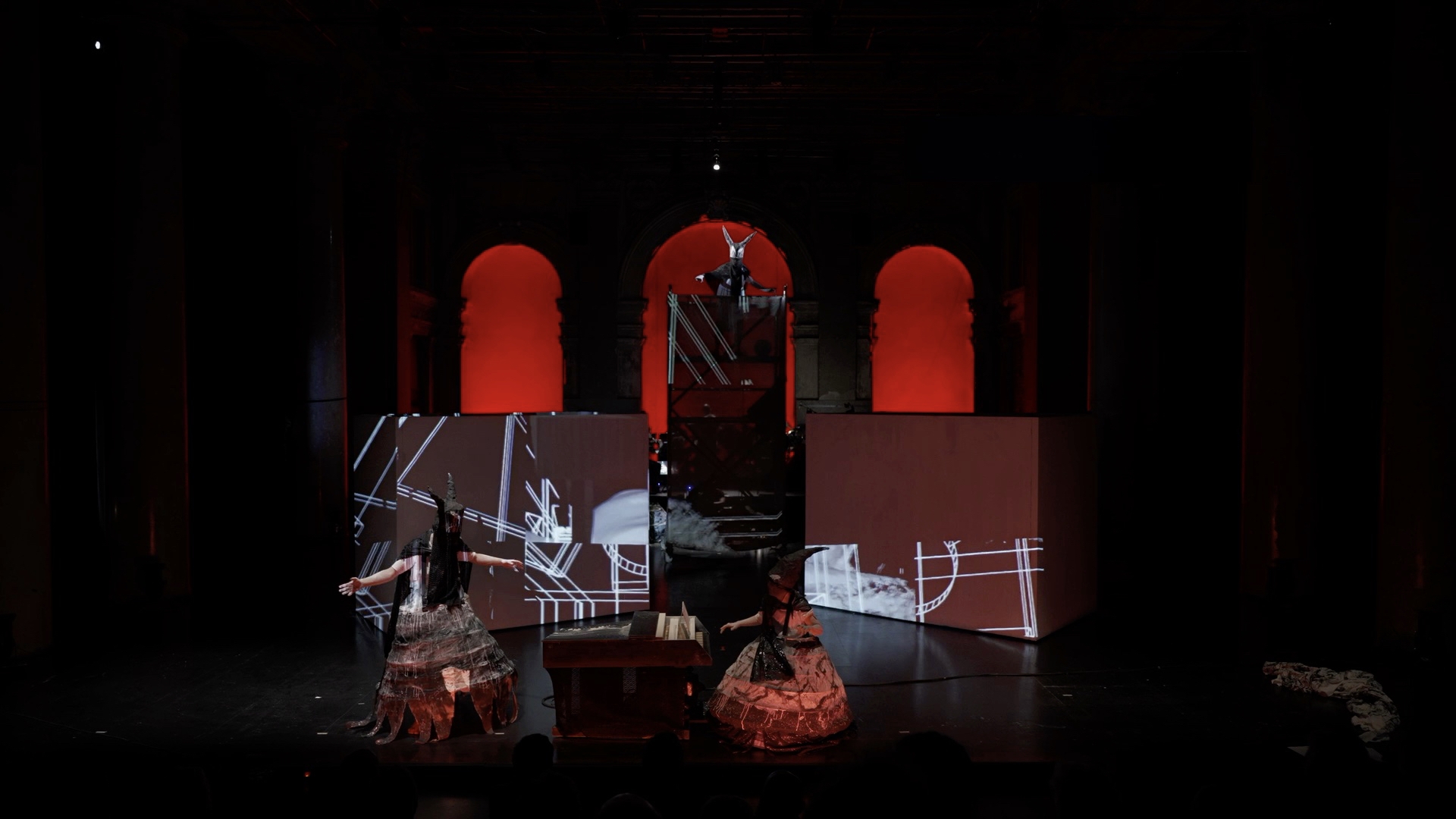
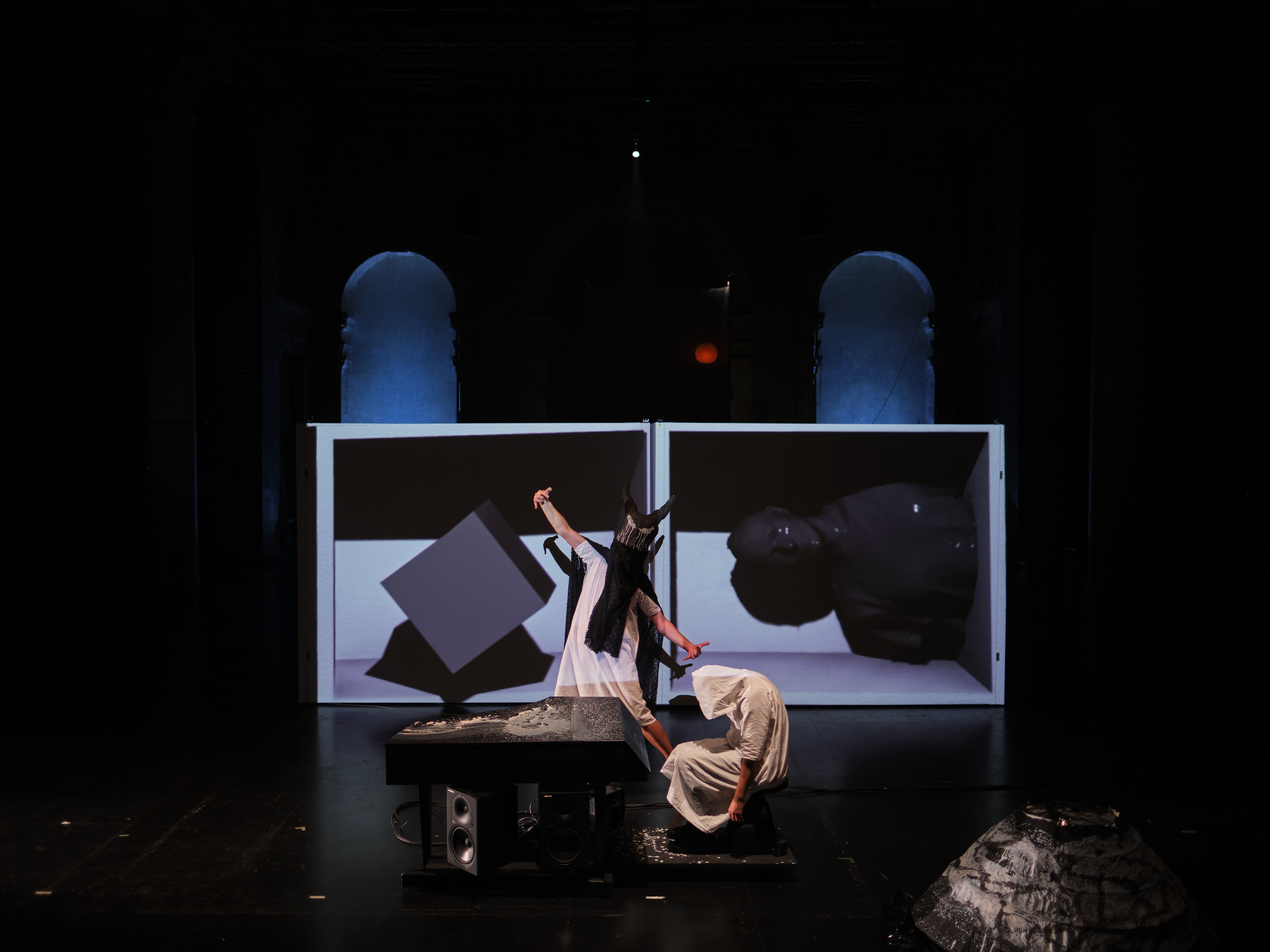
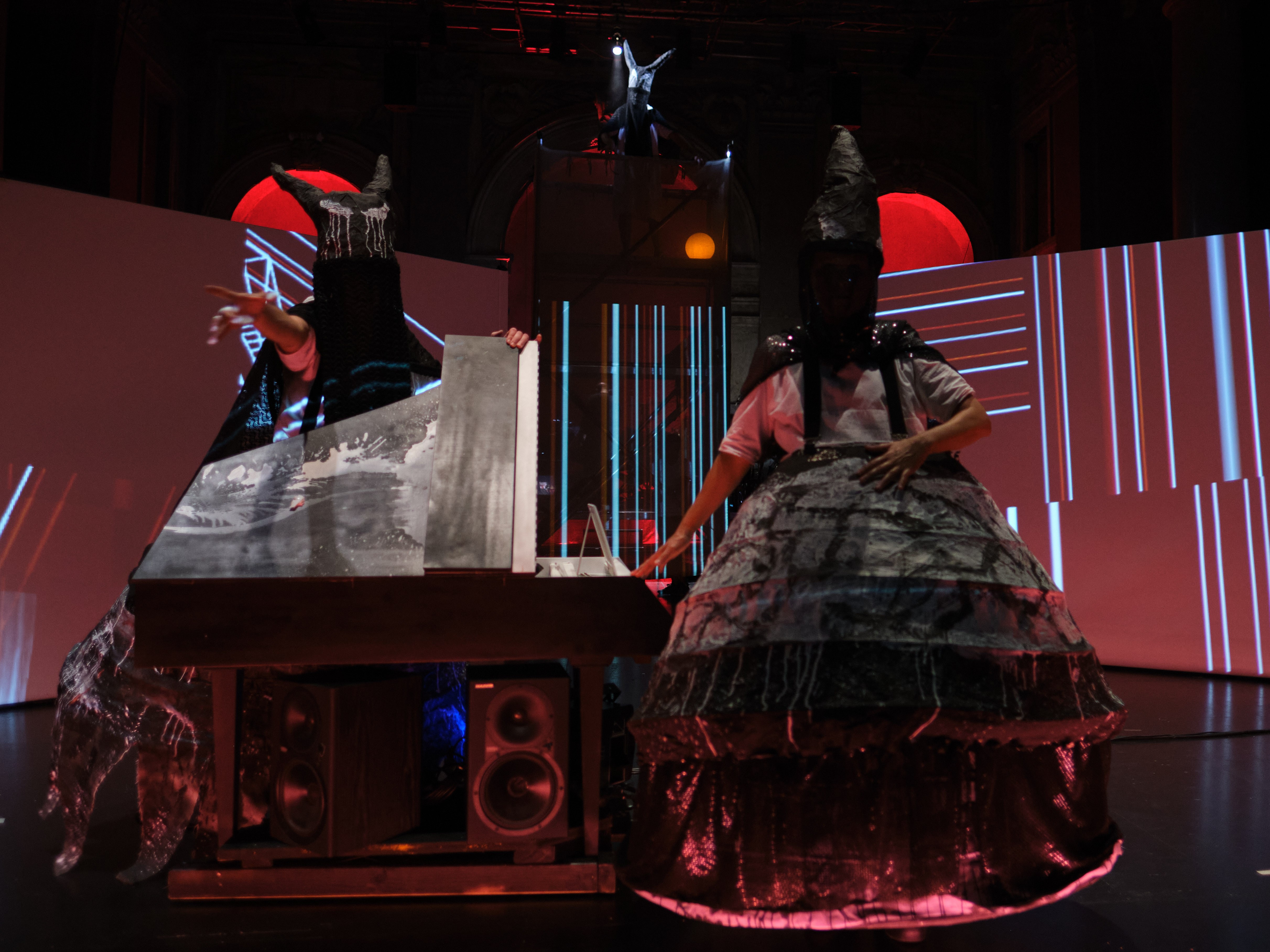
The staging mirrors this kinetic instability. Michael Höppner’s direction plays with theatrical excess and fragmentation, creating a visual world in which bodies, images and historical references swirl relentlessly. Three operatic soloists navigate this unstable terrain, a soprano, countertenor and bass-baritone performing roles that hover between mythic archetype and digital avatar. The instrumentalists of Black Page Orchestra sit at the centre of the storm, delivering a relentless barrage of timbral experimentation. Live video amplifies and distorts the action, turning the stage into a pulsating feedback loop where image responds to sound and sound responds to image.
Beneath the pyrotechnics, Pandora retains a clear conceptual spine. The myth of creation, curiosity and catastrophic release becomes a metaphor for contemporary cultural acceleration. What happens when aesthetic, technological and historical forces are unleashed without restraint. What does progress look like when it devours its own origins. Kranebitter does not answer these questions so much as detonate them. The piece embraces chaos not as collapse, but as a generative principle.
The jury responded to the sheer audacity of the work: its confident collision of eras, its sculptural approach to sound and its ability to transform historical material into something genuinely alive. They noted the exceptional rigour of the scenography and costume design, which approach bodies as living sculptures rather than vessels for narrative clarity. Pandora is the kind of work that refuses to behave. It demands attention not through decorum, but through its exhilarating sense of risk.
In the end, the opera does not simply retell a myth, it becomes one. Pandora’s box opens and out rushes a cacophony of history, technology, desire and noise. Whether read as satire, ritual or sonic onslaught, one thing is clear: this is music theatre operating at full voltage, willing to tear through its own foundations in search of new life.
From the harpsichord works of the French Baroque composer Joseph Nicolas Pancrace Royer and Voltaire’s libretto Pandore, which served as the basis for Royer’s final and sadly lost opera, emerges a frenzy of sound and image, a shimmering chaos in which harpsichord avalanches, excessive electronics, and baroque vocal lines merge into an overflowing stream of ornament and disruption. Between Voltaire’s grandly musical language in the arias unfolds a nonlinear narrative woven from texts by Diderot’s Rameau’s Nephew, Goethe’s musical analyses, anecdotes from the memoirs of the infamous Parisian executioner Charles Henry Sanson, and the story of Charlotte Corday’s murder of Jean-Paul Marat.
Composition, concept and text compilation
Matthias Kranebitter
Live video projection and mapping
Patrik Lechner
Scenography and costumes
Christopher Sturmer
Staging
Michael Höppner
Pandora
Heike Porstein
Prometheus
Georg Bochow
Jupiter
Andreas Jankowitsch
Orchestra
Black Page Orchestra
Conductor
Vinicius Kattah
Production
Black Page Orchestra
Coproduction
Musiktheatertage Wien
Nationaltheater Weimar