Competition
The Rise // Eva Reiter, Michiel Vandevelde & Ictus Ensemble Austria / Belgium
The Rise is a work that treats communication not as a given but as terrain: unstable, echoing, charged with the possibility of misalignment. Rather than smoothing these fractures, the piece makes them generative. Directed by Eva Reiter and Michiel Vandevelde with Ictus Ensemble, it constructs an entire musical and choreographic system rooted in translation across languages, senses, bodies and technologies. What emerges is a performance that feels less like a staged production and more like an ecosystem, one in which meaning is continually negotiated rather than handed down.
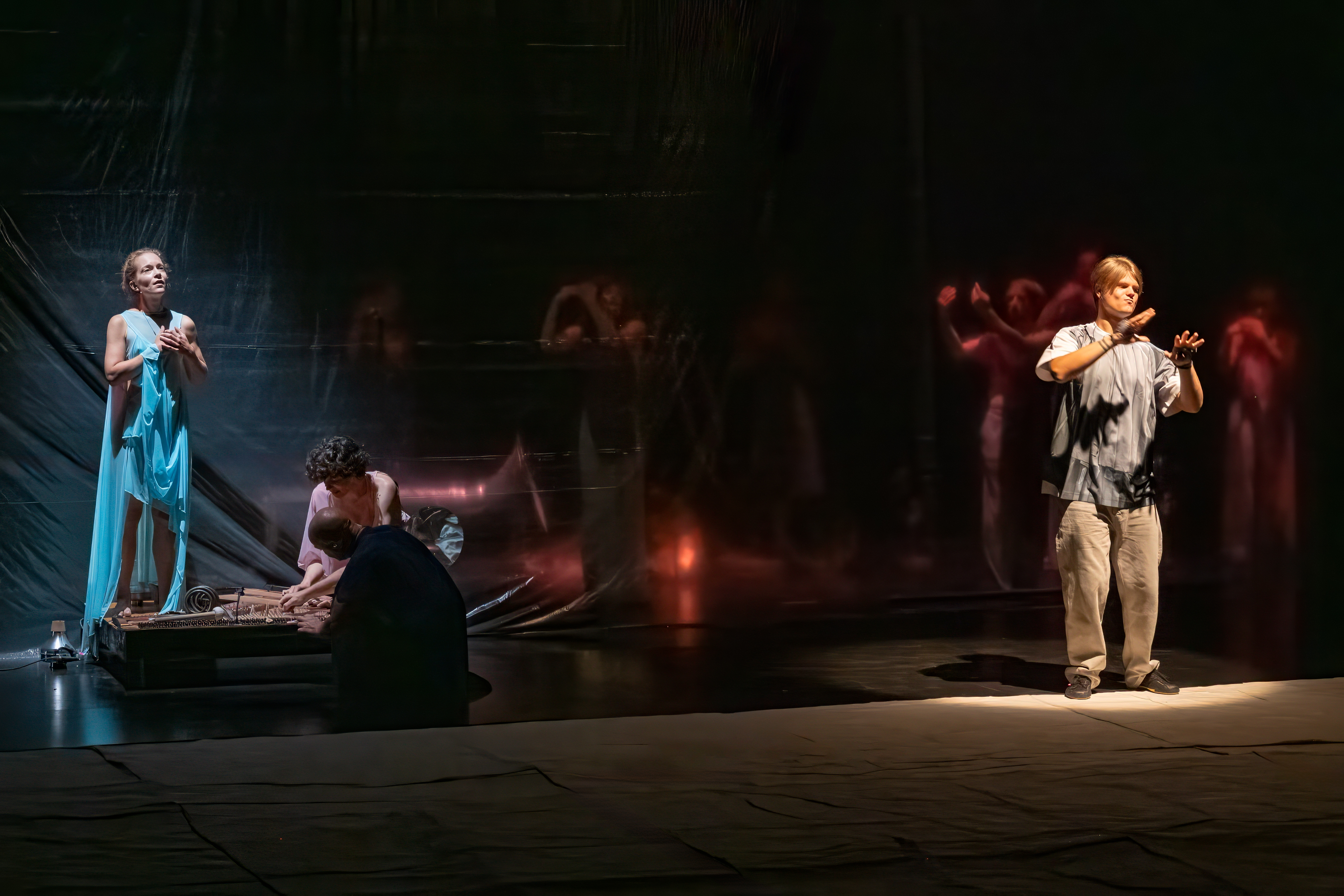
At the centre stands Ruben Grandits, a Deaf performer whose signing becomes the core musical material. His gestures, movements and pauses are translated through self-built instruments that convert motion directly into sound. The effect is startling: the body becomes a resonant instrument, the visual becomes audible and music becomes a form of embodied speech. Rather than “including” Deaf poetics, the work builds its dramaturgical and sonic world from them. Accessibility is not an add-on here; it is the conceptual engine.
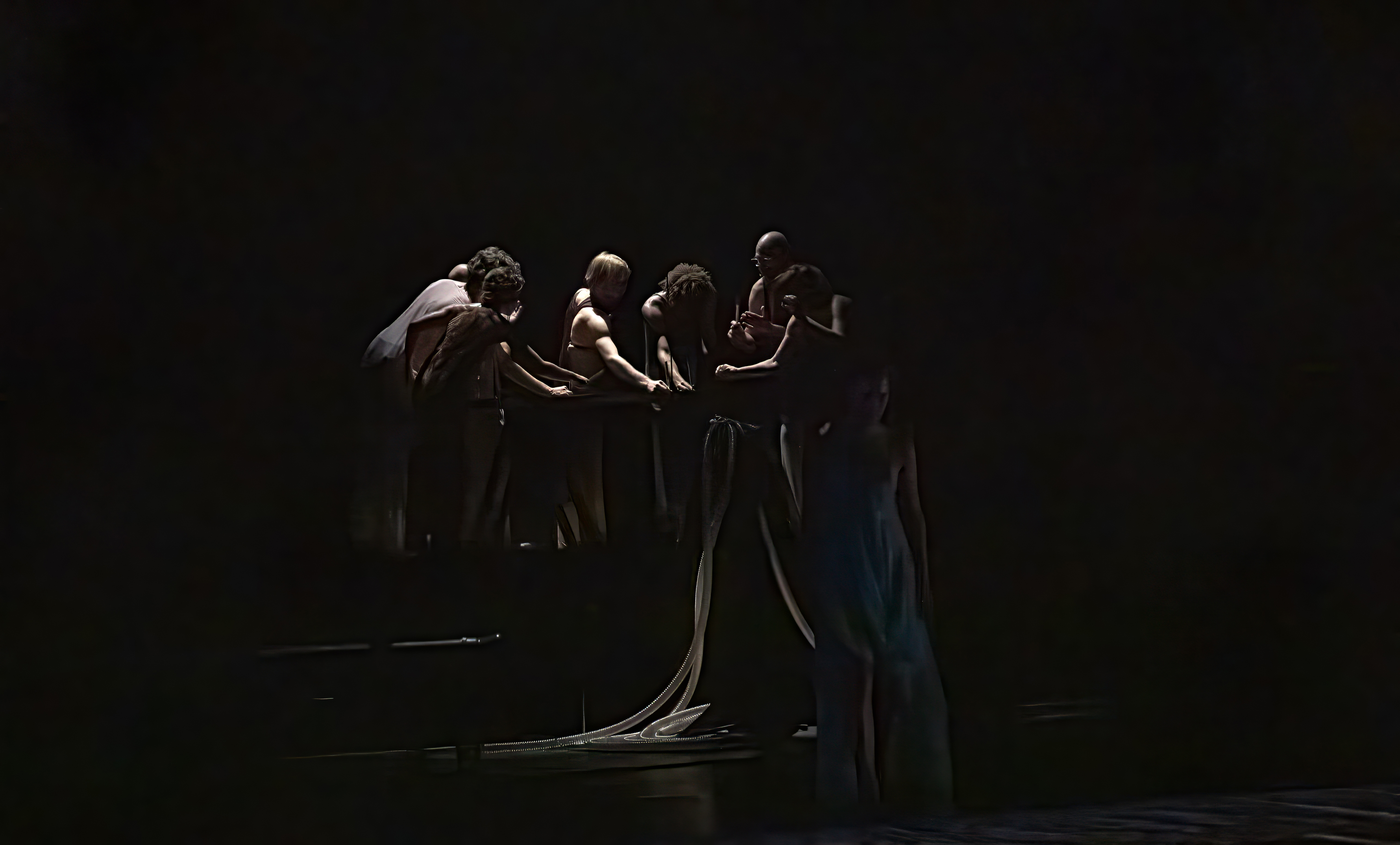
Around Grandits, the ensemble forms a collective body that absorbs, refracts and echoes. Dancers and vocalists inhabit hybrid roles, shaking off disciplinary borders as they respond to translated and re-translated messages. Sound ripples into sign; sign ripples back into sound. The choir, far from a passive aggregate, serves as a destabilising chorus, holding threads of meaning together while simultaneously allowing them to fray. Nothing settles, yet everything connects.
The staging draws on Louise Glück’s Averno, a text preoccupied with thresholds and underworlds, but the reference is treated as a point of departure rather than a container. Like Glück’s mythical lake, believed to be an entrance to the underworld, The Rise opens a permeable space where communication leaks, mutates and transforms. It suggests that understanding is not an endpoint but a form of shared vulnerability.
The jury praised the work’s audacity: its ability to invent new channels of perception, its delicate handling of multiplicity and its commitment to a sonic language that prioritises relationality over hierarchy. They spoke about the ingenuity of the invented instruments, the integrity of the collaborative process and the unusual pleasure of watching meaning emerge from bodies negotiating difference.
What makes The Rise feel truly contemporary is its refusal of binary clarity. Instead of treating misunderstanding as an obstacle, it celebrates it as a fertile artistic condition. The piece invites the audience to inhabit partial comprehension, not as loss but as an expanded mode of listening. You are asked to trust your intuition, to assemble sense from resonance rather than explanation.
In a cultural moment obsessed with immediacy and precision, The Rise argues for the opposite: a music theatre where communication is textured, unstable, sensorially plural and gloriously uncontained. It is not a tale told but a world built, one where sound and sign finally meet on equal ground.
The Rise approaches communication as unstable terrain rather than a fixed system. Directed by Eva Reiter and Michiel Vandevelde with Ictus Ensemble, the piece constructs a performance ecology based on translation across languages, senses, bodies and technologies.
At its centre stands Deaf performer Ruben Grandits, whose signing becomes the primary musical material. His gestures are captured by specially designed instruments that convert movement directly into sound. The body becomes instrument, the visual becomes audible and music becomes embodied speech.
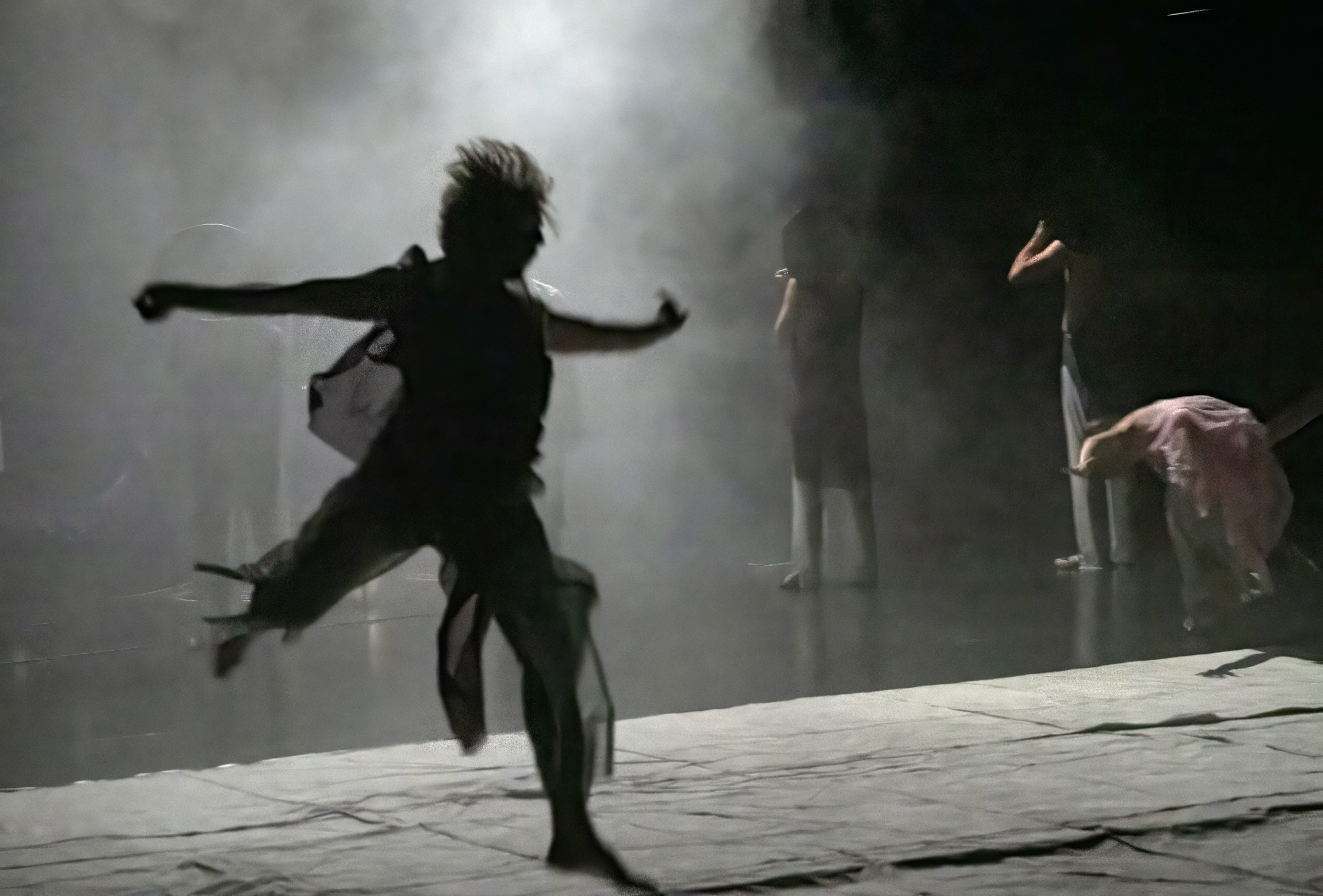
Around him, dancers and vocalists form a responsive collective. Messages are translated, distorted and retranslated as they circulate through the ensemble. Sound transforms into sign, sign returns as movement or resonance. Meaning remains fluid.
The work loosely draws on Louise Glück’s poetry cycle Averno, which imagines a mythical threshold between worlds. Here the reference becomes a conceptual bridge toward a multiverse where translation itself is the only stable language.
Rather than aiming for seamless comprehension, The Rise celebrates partial understanding. The audience is invited to assemble meaning from sensation, intuition and resonance. Listening becomes a shared labour rather than a passive act.
Concept, direction and set design
Eva Reiter, Michiel Vandevelde
Music composition and electronics
Eva Reiter
Choreography and lighting
Michiel Vandevelde
Narrator
Ruben Grandits
Soprano
Lore Binon
or Maris Pajuste (Bruges, 26 March)
Dancers
Amanda Barrio Charmelo
Nathan Felix-Rivot
Antoine Roux-Briffaud
Aure Wachter
Musicians
Dirk Descheemaeker
Hanna Kölbel
(or Lucas Messler in Hamburg)
Eva Reiter
Michael Schmid
Costume design
Tutia Schaad
IRCAM computer music design
Augustin Muller
Sound
Alexandre Fostier
Sound assistance
Antoine Delagoutte
(or Vincent Debongnie in Bruges and Hamburg)
Outside eye
Kristof van Baarle
International Sign translation and original sign poetry
Günter Roiss
Georg Marsh
Ruben Grandits
Stefanie Fieber-Grandits
Eva Reiter
Technical director
Pieter Nys
Light operator
Freek Pieters
Set design assistance
Daniella Khoury
Backdrop design
Ward Heirwegh
Costume assistance
Jette Dresbach
Production
Ictus Ensemble